
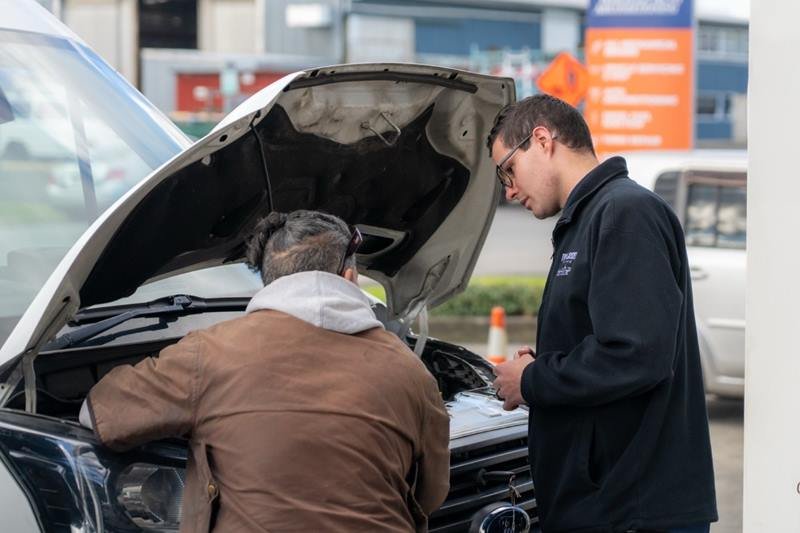
What a pre-purchase inspection covers
Inspections vary by provider and price, but a good one usually includes:
- Engine and transmission: leaks, noises, fluid condition, warning lights and, often, a scan for stored fault codes.
- Body and chassis: rust, accident repairs, uneven panel gaps and paint, and signs of flood damage.
- Suspension, steering and brakes: worn parts, play in the steering and brake condition.
- Tyres: tread depth, age and uneven wear.
- Electrics and interior: lights, windows, air-con, infotainment and safety systems.
- A road test to check how it drives, shifts and stops.
- A written report listing faults and, often, estimated repair costs.
For hybrids and electric vehicles, ask whether the inspection includes a battery health check. A worn high-voltage battery can be very expensive to replace.
Who does pre-purchase inspections?
- State motoring clubs: NRMA, RACV, RACQ, RAC WA, RAA and RACT offer vehicle inspections, sometimes with a member discount.
- Mobile inspection services that come to the seller’s home.
- An independent mechanic you trust, ideally one who knows the make.
Use someone independent of the seller, and be cautious about an inspector the seller recommends.
How much does it cost?
Prices depend on the provider, your location and how detailed the inspection is. Basic inspections often cost a couple of hundred dollars, and comprehensive ones more. Compare that with the price of a single surprise repair, like a gearbox or timing chain, and it’s usually money well spent on any car worth more than a few thousand dollars.
Inspection vs roadworthy vs PPSR check
| Check | What it tells you | What it doesn’t |
|---|---|---|
| Pre-purchase inspection | The car’s overall mechanical and body condition, and likely repair costs | Finance owing, stolen status or write-off records |
| Roadworthy or safety certificate | That safety items met the standard on the day of inspection | The general mechanical condition, such as engine or gearbox wear |
| PPSR check | Finance owing, written-off and stolen status recorded against the VIN | Mechanical condition |
You need both kinds of check. An inspection can’t tell you about money owing on a car, and a PPSR check can’t tell you whether the gearbox is failing. Together they cover the two biggest risks of buying used.
Arranging an inspection with a private seller
- Ask the seller first. Most genuine sellers agree. A seller who refuses an inspection is a warning sign.
- Book it before you pay, and make any deposit conditional on a satisfactory inspection, in writing.
- Use the report to negotiate. Faults found by the inspector are a fair reason to ask for a lower price.
See the full used car buying checklist for the other steps in a private sale.