
What rebirthing and cloning mean
- Rebirthing: a stolen car is given the identity of a written-off car of the same make and model. Criminals buy the wreck for its VIN and papers, then move that identity onto the stolen car.
- Cloning: a stolen car is given the VIN and number plates of a similar legitimate car that’s still on the road, so a quick rego check comes back clean.
Either way, the car you’re looking at isn’t really the car on the paperwork.
Warning signs on the car
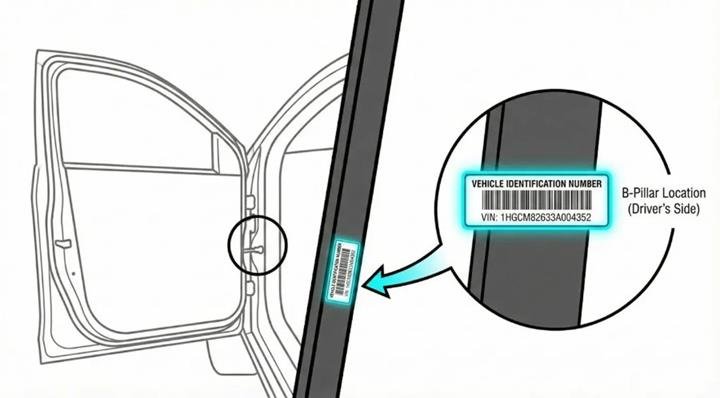
- VINs that don’t match between the windscreen, the door pillar, the build or compliance plate, the engine bay and the rego papers. Where to find each VIN.
- Tampered VIN labels or plates: scratches, glue, bent edges, non-factory rivets or screws, or a sticker that looks newer than the car around it.
- Ignition or lock damage, a replaced ignition barrel, or only one key, especially a new-looking one.
- Fresh paint or panels on a car with no damage history, or paint in door jambs that doesn’t match the outside.
Warning signs in the sale
- The price is well below similar cars.
- The seller wants to meet in a car park or on the street, not at their home.
- Their name or address doesn’t match the registration papers, or they can’t show ID.
- They push for a quick cash sale.
- There’s no service history, or the logbook belongs to a different car.
If the VINs don’t match, stop. There are innocent explanations for a missing label, but a mismatch between VINs on the same car is a serious red flag.
How to check a car’s identity
- Check every VIN location on the car, and make sure they all match each other and the rego papers.
- Run a PPSR check on the VIN. Check that the make, model, year and colour on the result match the car in front of you.
- Look at the write-off record. If the VIN is recorded as written off but the car shows no sign of major repairs, it could be a rebirthed car using a wreck’s identity. What write-off records mean.
- Check the stolen status on the PPSR result. More on stolen vehicle checks.
- Do a free rego check on the plates and make sure the make and model match too.
- Check the seller’s ID against the name and address on the papers.
- Get a pre-purchase inspection. An experienced mechanic or inspector may spot tampering you’d miss. What an inspection covers.
What to do if something seems wrong
- Don’t buy the car, and don’t confront the seller.
- Report it to the police, or anonymously to Crime Stoppers on 1800 333 000.
- If you’ve already bought it, contact the police and keep your receipt, messages and the ad.